

The tie, an accessory with a long history, is an integral part of men's formal wear. It has the power to transform a simple suit into a sophisticated look, adding style and prestige. Its proper use, however, requires not only good taste but also adherence to certain basic rules concerning its length, choice of pattern and tying.
The importance of length
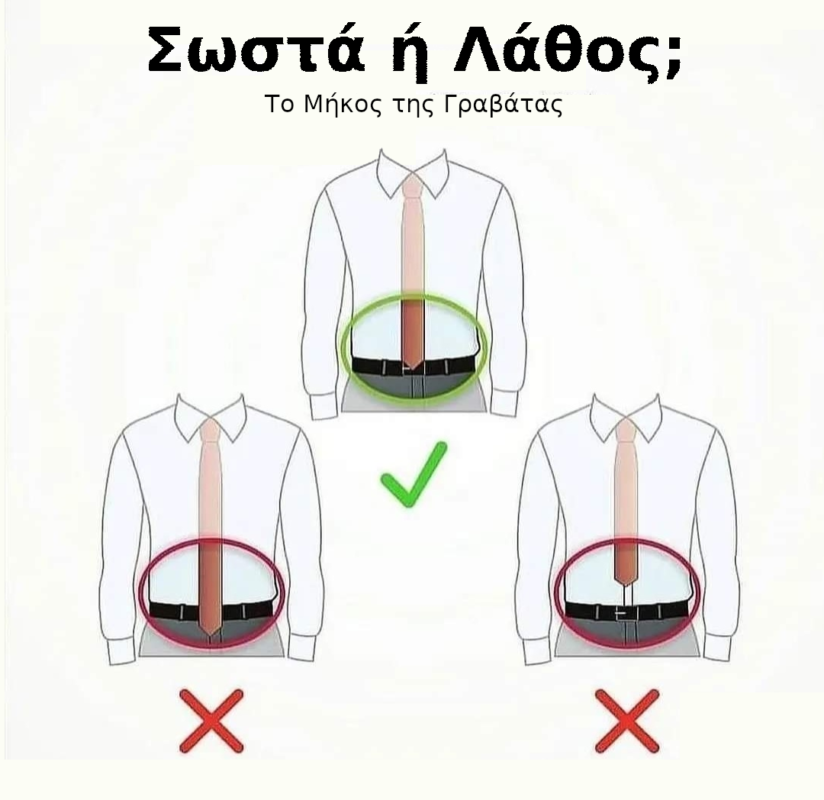
The most common question that comes up about the tie is about its length. How long does it have to be to be considered "right"? The answer lies in the detail. This is one of the basic rules that determine the elegance of the overall look. If the tie is shorter, it causes a sense of clutter or even comicality. If it is longer, it creates the impression of carelessness and lack of care in appearance.
For ties that do not have a "pointed" finish but a flat (horizontal) finish, the rule remains the same. The underside of the tie should touch just above the upper part of the belt and buckle. Any deviation from this rule may detract from the visual harmony of the ensemble.
Colour and pattern
In addition to the length, the choice of color and pattern of the tie is equally important. Dark, solid-coloured ties - especially in shades of blue and grey - tend to offer a subtle but strong character. On the other hand, ties with stripes or geometric patterns add a touch of freshness and dynamism, especially in more casual settings or at business meetings.
When it comes to formal events or more conservative settings, a tie with a simple pattern (such as small stripes or subtle points) will enhance the image of elegance. The key is not to overpower the overall look, but to work in a complementary way, emphasizing the quality of the fabric and the technique of the suit.
Quality and fabric
The quality of the tie also plays a crucial role. Silk ties are timelessly the most luxurious choice. Their material offers a natural shine, pleasant texture and durability. Handmade pieces are the epitome of luxury, as the care and attention given to their creation is evident in every detail, from the stitching to the fall.
Alternatively, for less formal occasions, wool or cotton ties can offer a warmer and more casual option while maintaining a balance of elegance and functionality. They are ideal for autumn and winter looks, as their material is linked to seasonal fashion.
The right binding
The tying of the tie is the final touch that completes the picture. There are many ways of tying, but the most classic and timeless is the "Four-in-hand" or "Windsor" knot. The former tends to create a small, subtle knot that works perfectly with narrower lapels and monochrome ties. The "Windsor", on the other hand, is larger and bulkier, ideal for wider lapels or formal events that require a larger presence.
Based on the above, the tie is not just an accessory but an element that, if worn correctly, brings out the personality and character of the man. The right choices of length, colour, pattern and tying are what make the difference between a simple look and a look full of authority and confidence.